Thursday, June 6, 2013

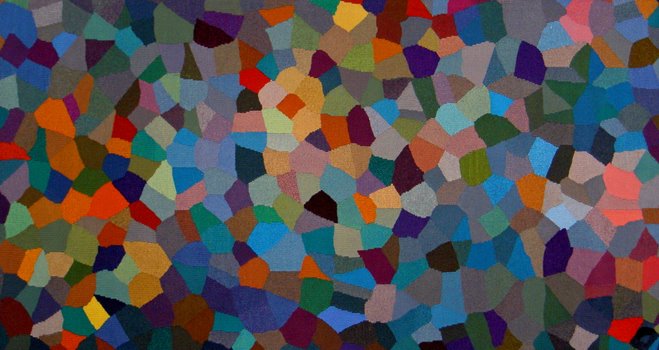
Fate, Destiny and Self Determination is shaping up

 
Ellen Allas
Ellen will be heading out in October to go to Peru and will study weaving with Maximo Laura.
We're winding down our efforts and taking a summer break. That only means that there won't be any weaving done on the international tapestry project located at the Toronto Weaving School. We'll resume that effort around mid-September.
From bottom to top: Judite Vagners, Cheryl Raymond and Joan MacKenzie
Cheryl and Joan are members of the Etobicoke Guild of Weavers and Spinners and joined us at the Toronto Weaving School to work on the international tapestry project, Fate, Destiny and Self Determination. Judite Vagners, herself now an accomplished (tapestry) weaver joins them in the weaving.
Meanwhile, that doesn't mean that the project has come to a standstill. Shapes are coming in every week, as well as new participants. There will be other tapestry events, people and viewings that I'll look forward to sharing with you in the weeks to come.
Shape received by Christine Pradel-Lien from Angers, France. She recently had an exhibition of her tapestries there. Go to this site to see more of her work: http://pradellientapestries.blogspot.ca/

Shape received by Katie Russell from Scotland , UK. You can see more of her work at www.katierussellweave.com.

Shapes made by Mai Liis Toome, who will be joining Ellen Allas in Peru to study tapestry with Maximo Laura in October. Note the textures that were created, inspired by a workshop taken earlier in the year.


JacQueline Kellor attended the Alberta College of Art and Design in Canada and  is from Saskatchewan and now living in Alberta. She created this very textural shape for the project. You can see more of her work at www.heartsonfibre.blogspot.com.

Tuesday, June 4, 2013

Lord of the Hunt and Dovecot Studios at Toronto Weaving School


One day a few weeks ago, I was doing some photocopying at the Toronto Weaving School, which shares space with  many other kinds of instructional opportunities and subjects, and consequently,  all kinds of instruction goes on there, from languages, to furniture upholstery, furniture refinishing, wood carving, ballroom dancing, language instruction etc..... It's a dynamic building for mostly adult learning. One of these instructors came up to me to talk because she had found this crumpled paper in the photocopier that had jammed it up. Instantly she thought I was the culprit because the page happened to be about tapestries woven at Dovecot studios (http://dovecotstudios.com/) at the turn of the twentieth century. Of course, she probably didn't believe me when I told her that I was not the culprit and of course I can completely understand her incredulity. The page information had very detailed information. Who else in the entire building would have photocopied such a page? This mystery intrigued me !

I was  also absolutely curious as to what book it came from because from what I read from this page, the weavers were named  and  their initials were woven into the tapestry. The person who designed  the tapestry was also named:  Skeoch Cumming. So I tried googling it with no luck except to find myself ordering a book The Art of Modern Tapestry: Dovecot Studios Since 1912, edited by Elizabeth Cumming, which I did not regret but wonder is she related to. Skoech?  Hmmmmmmm....the mystery deepens ......well...this page wasn't in it. My curiosity compelled me to post it on Facebook and sure enough, to my immense gratitude, the first response was from Kathe Todd Hooker who said that she thought it was probably a page from an exhibition catalogue from Dovecot Studios in Wales but could not tell me more than that. You can see Kathe`s incredible work here:  http://kathetoddhooker.blogspot.ca/.

Clare Coyle from the UK, who studied at the Edinburgh College of Art, is the one that illuminated me! And oh....what a response! She said:
``I noticed your post about The Lord of the Hunt image and answered......it is from the first Dovecot exhibition catalogue, Master Weavers.
The full title is "Master Weavers -Tapestry from the Dovecot Studios 1912 - 1980. The image is  the first tapestry they wove in 1912. It's not available on Amazon uk and is on the US site and it seems to be available 2nd hand I think from around $15 dollars or so which seems a bargain! I'll post a photo of the page in the catalogue it is from as there is an actual photo of the man they used as a model - it states " James Roddick, the night watchman modelling for a figure in Lord of the Hunt". He doesn't look a very happy chappy! Lol. Published by Canongate press in Edinburgh around 1980, so no ISBN no. The version I have has a mainly white cover and a small (Archie) Brennan tapestry in the middle. I don't know if there was a second edition with the other cover or not. ``

When I asked Clare if she had a website we could share with you all, she responded:
``Sadly I have been very lazy with setting up any website, however I have quite a few albums on my (Facebook) pages  with a number of my tapestries in them. Have a wee gander through them!``

Thanks Clare and Kathe!


Friday, May 31, 2013

Ceinture fléchée shapes


Ceinture fléchée woven by Francois Seguin
The ceinture fléchée , also know as the L’Assomption sash or arrow sash, is an off loom finger weaving technique once commonly employed by French Canadians  and Metis of the 19th century. It is truly one of the iconic Canadian handcrafted items. The beauty of the technique is its portability. It’s limitation is that one can only create these weavings in farily narrow widths. The technique was used to create sashes for men to tie around their jackets to prevent the cold from penetrating. The warp   has to be long enough to circle  twice around the waist of the intended wearer, as well as include a lengthy fringe.
Traditionally, belts or sashes were between 15 to 25 centimeters in width and lengths varied to as much as 2 metres. Different patterning came to represent various groups, such as the Lower Canadian Rebellion, the Quebec Winter Carnival, and the Acadians.

The coloured sash was brought to western Canada by the men working for the North West Company, a fur trading company. The voyageur’s sashes attracted the attention of several indigenous groups with whom they exchanged goods and soon these people wished to possess such sashes. Consequently, the Northwest Company began to manufacture these sashes in Montreal and the surrounding area, in a fine worsted wool imported from England. The Hudson’s Bay Company also became interested in producing and selling these finger woven sashes.
Francois really struggled to apply the criteria of the Fate, Destiny and Self Determination to the Ceinture fléchée technique. He kept me posted as to his progress: " It was a long time weaving since February (2013). I have a piece of about 18 inches long by 10. Of course, working full time on the weaving would have been completed a while ago.This week I started drawing and cutting the shapes. My fears were founded. Its a total disaster. The weaving is coming apart and I’m not satisfied with the border. So, it’s a scratch for the first attempt. Having done enough material, I’ll try a different technique and another. Until I find satisfaction or I run out of material. I tried the tapestry technique of weaving in the ends. That didn’t work so well and made the material too thick in some areas. I tried knotting. I lost the contours of the shapes. The difficulty is the warp and wefts are shared like braiding. They go left and right and cross each others by times to form the arrow heads design. Hopefully I’ll find a good technique soon. I’d rather avoid the tape method. I would like the pieces to be admired from both sides.
 
   First attempt, weaving the ends in, failed.
             Second attempt, knotting the ends, failed.
              Third attempt, Maori border, failed miserably.
-       
   Fourth attempt, overlock, is holding.
Yeah....mission accomplished.
 
Below I've attached a YouTube video about this. It is French though.....

https://www.youtube.com/watch?v=fNMmHiOpGVA

Thursday, May 23, 2013

The Positive Effects of Colour

Every week I spend a few hours in my studio preparing the colours for the international tapestry project, Fate, Destiny and Self Determination. There are over 400 shapes for the community woven tapestry so it's too large a task to undertake all at once. I number all the shapes with the corresponding colour and when people come and weave they just have to locate the right number to match the shape they are weaving , just like a paint by number! It's a great way for people who don't know each other to get acquainted, or sometimes just to have a few quiet and introspective moments. It's a great way for people who don't usually weave tapestry to give it a try. This week Kathy Fletcher on the left, and Patti Wibe on the right, joined our efforts to weave the communal component of this tapestry project. More shapes are trickling in and I'll post some next week.
The positive effects of colour on spirit and mood are becoming evident, and are corroborated by those who have come to work on this project. This is no surprise to me and am glad that more are becoming aware of its positive effects. Aristotle and other ancient scientists/philosophers have written on the nature of light and colour  but it was Isaac Newton who first observed that  light is  the source of  colour sensation. In 1810,  Goethe published his comprehensive Theory of Colors in which he ascribed physiological effects to colour which in turn impacts on our psychological state.

Each colour has associations and meaning for the various cultures across the globe. Colour psychology explores the effects of colour on our cognitive functioning and emotions. Various cultures and religious practices attribute healing properties to the various colours, such as Hinduism who make reference to them when discussing the Chakras. So come out to the Toronto Weaving School and get in boost in your well being by weaving on our community tapestry and meet a bunch of really great people and weavers!

Exhibitions
If you are travelling in the States (as we Canadians like to say) here are a few tapestry exhibitions you'll want to check out. The second one will also include other kinds of fibre creations. Inspiring indeed!
Small Tapestry International 3: Outside the Line
Handforth Gallery, Taacoma Public Library
Tacoma, Washington
Opening reception: June 29, 2013 2:00 - 4:00 pm
June 13- August 3 2013

Troy-Hayner Cultural Center
Troy, Ohio
www.troyhayner.org
September 27 - December 1, 2013

This exhibition is organized by the American Tapestry Alliance.

Small Expressions 2013 organized by the Handweavers Guild of America (HGA)
June 1 - September 7, 2013Fine Line Creative Arts Center, St. Charles, Illinois  
Opening Reception: June 1, 2013, 5:30 - 8:00 p.m.
Gallery Talk by Juror Laura Foster Nicholson: 7:00 p.m
Wiedemann-Basketmobile
Small Expressions is an annual international juried exhibition that features high quality, contemporary fiber art. The artworks showcase various techniques such as interlacing, felting, paper, beading, and embellishing done on a small scale. The exhibition is sponsored by the Handweavers Guild of America, Inc. (HGA).


Laura Foster Nicholson, artist, designer, and owner of LFN Textiles, juried the exhibition. She selected work by 31 artists from 17 states and 3 countries.


Peggy Wiedemann, Basketmobile.
Photo: Jan Seeger
Pat Burns Wendland, who we'll be visiting next week, created  banners that will be a part of this exhibition at the Dufferin County Museum. More information about the exhibition at this link http://kenhallart.com/LegacyProject/

Thursday, May 16, 2013

Building Relationships

 
Laura de Vrij helping out with the international tapestry project, Fate Destiny and Self Determination
Susan Abrams and Susan Middleton also helped weaving the tapestry this week.
 In terms of process and logistics, weaving a tapestry seems more like 'building' a tapestry at times. This is particularly evident in this tapestry as the cells of woven colour shapes  builds on top of the previous one in a certain methodical order. And  like this tapestry, where all the shapes fit together to form a whole, I begin to view this project and the process of tapestry weaving as a metaphor for building relationships and thus community. Like the cells of colours in the tapestry, relationships are built one at a time. Like the cells, each relationship and person has a different colour and texture.

So far this is how much we've accomplished since January 2013.
As this idea percolated over the week I  began to think about how relationships are the bulding blocks of our lives and all that happens...or doesn't happen in them. They are the source of our successes, and perhaps also our failures and disappointements. I was curious about what I could find about building relationships and went perusing on the internet. I enjoyed reading this article that you too can read by clicking on this link: http://ctb.ku.edu/en/tablecontents/sub_section_main_1139.aspx
 
The current page logging who has been weaving on the tapestry and how much time they spent doing so.
My thoughts turn to the weaving community and our collective desire to see it be more vibrant and provide more opportunities and more successes for weavers. Bulding relationships is the way that will support the weft of our interactions and construct the web of our connections to others. As a tapestry is only completed through steadfast, consistent and with a methodical approach, so too must relationships be maintained and sustained to create a healthy weaving community that works well together to all of our benefit, enjoyment and success, starting here at home, and throughout the rest of the world.
Kate Kitchen's tapestry woven on a piece of insect bored bark.
Kate Kitchen is a regular attendee at the Toronto Weaving School and we have featured her work many times over the years. These days she is drawn to using natural materials and this is a lovely integration of a found natural object at her cottage and tapestry weaving. She likes to write haikus for her small tapestries. You can find more of her work at http://www.katekitchenart.com/
 
butterflies of colour for the international tapestry project, Fate, Destiny and Self Determination
 
More shapes are coming in and will post on the next blog post!
www.tapestryline.com

Thursday, May 9, 2013

Co-Creation

 
I've always thought of weaving as a solitary activity, especially tapestry weaving, but over the years that I've been teaching weaving, it has become very clear, that weaving in a group maintains enthusiasm and momentum for a project as well as enhances creativity. This has become abundantly clear with this international tapestry project. I find it even more exciting to co-create these tapestries with others simultaneously, either in the same physical space as me, or in their own environment, miles and countries away from me.

Weaving continues on the international tapestry project, Fate, Destiny and Self Determination.  Debbie Harris, in the foreground of the above photo, took a break from the neutral coloured navajo rug (shown below) that she is weaving in the class to work with more  more vivid colours. Behind her, the ever beautiful and gracious Allison Turner joins her. Allison is mutli talented and weaving is only one of her skills.

It was a big surprise to see one of my ex-students show up unannounced yesterday. Anne Odell, pictured here on the left, moved to Dartmouth, Nova Scotia a few years ago. She's in town visiting family and friends and thought she would pop in and say hello and make her contribution to the international tapestry project. Susan Abrams, on her right, tried her hand at tapestry weaving for the first time.
 
The spring dates remaining to weave on the tapestry are: May 13, 15, 22, 27, June 3. We will resume the project mid September, but if you are visiting from out of town, it may be possible to book some time on the project if you contact me linedufour.tapestry@gmail.com ahead of the time you arrive.


Thursday, May 2, 2013

Creativity a Journey of Discovery

Elizabeth Evans and Susan Middleton continuing to weave on the international tapestry project, Fate, Destiny and Self Determination at the Toronto Weaving School.
As many of you already know, my students are a great source of inspiration for me. How they learn , what they create is always a new and delightful discovery of who they are as individuals. Recently one of my beginning tapestry students baulked at continuing to create her tapestry sampler not even a quarter of the way through. She struggled to share what she was feeling about the process and how it didn't seem well suited to her personality. At first I suggested that maybe she was in the wrong place and perhaps being at an Art College might be better. She seemed to feel that being where she was was where she wanted to be. I gave her permission to give herself permission to stop creating the prescribed sampler and do whatever she wanted to do. One thing is clear to me....that if anything we need more time to play, to explore, to imagine, to wonder......and I sensed that the structure of tapestry weaving, the traditional practice of it was perhaps too rigid and confining. As this was percolating in my mind, and I recalled the many experiments I did with my own weaving, trying wire, fishing line, paper and found materials, encouraged by my own tapestry weaving teacher at the Ontario College of Art and Design, William Hodge, over 25 years ago.
detail of tapestry woven by Christine Eboral
Recently I read an article written by Christine Eboral, who uses her tapestry weaving to express her about toxic waste cluttering and damaging the planet and our health. She says...."virtually all my weaving has been with discarded plastic packaging - un-reusable bags, mail order wrappers, fruit and veg nets and the metallised film used for bags of crisps, snakcs, coffee, etc.....collected by friends and picked up from the street plublic transport, the countryside ......"
detail of tapestry woven by Christine Eboral
Other materials are also used for weaving, as demonstrated by the work of Erin Lewis whose work you can see on her website www.erinlewis.ca . In  photo below she's woven with fibre optics and this piece is inspired by the Northern Lights. Recently Erin was featured in an article in the magazine, Surface Design.

Erin Lewis. Hand-woven fibre optic sculpture driven by real-time data of Northern Lights over Canada. 2011.
Fibre optics, polyester monofilament, LEDs, foam, electronic circuitry.

All of us define ourselves by what we create and make. It is telling the world who you are, and what kind of thoughts you have. The act of creation is a journey of self discovery and learning, one filled with excitement and infinite possibilities if you want to embark upon it. It's not always one where there ae predictable results and desired outcomes. Sometimes when the experimentation doesn't go the way one thinks, the 'wrong' turn or disappointing results are really opening the door to other possibilities you hadn't imagined. How much creative risk  can one live with is determined by each individual. In my estimation, whatever your prefered methodology, it's all valid. Just honour your inner voice and where it's leading you. 
Catherine Brackley weaving on the Fate, Destiny and Self Determination tapestry.