Friday, July 5, 2024

World wide exhibitions of new tapestries


A new series of tapestries I've created entitled Plastic Oceans will be shown at the Mississippi Valley Textile Museum in Almonte, Ontario Canada from July 20 - September 28 2024 as part of a group tapestry show featuring eight other tapestry weavers from across Canada. 

Opening Reception: July 20   13h - 16h. (1pm - 4pm)

I hope I will have the pleasure of seeing you then. If not, then perhaps you can visit during the coming months. 


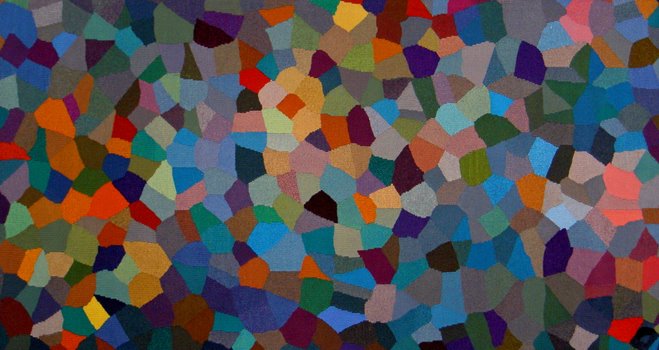
The World in Pieces has been selected to be part of Heallreaf V, three exhibitions in the UK. I will be in attendance at the closing of the last exhibition ceremony on the last day, April 6 2025. 

Heallreaf 5
Weston Park, Shropshire, UK
June 29 - August 29 2024

Heallreaf 5
Morley Gallery, London, UK
December 10 - 20, 2024

Heallreaf 5
Farfield Mill, Cumbria, UK
January 8 - April 6, 2025


My most recent tapestry, Heart Strings, will be exhibited in Bogota Columbia

THROUGH LIFE / a través de la Vida
Casa Lleras
Biblioteca Museo Carlos Lleras Restrepo
Bogata, Columbia
Vernissage: October 23 2024
exhibition continues until December 6 2024


The Fate, Destiny and Self Determination installation will be exhibited in Guimaeres Portugal as part of Contextile 2024, thanks to Adrian Landry and Laurie Beland, part of the Biennial International de lin du Portneuf (BILP) who partner with Contextile. The dates of its exhibition fall exactly ten years after its first exhibition at Craft Ontario in Toronto, thanks to the efforts of Janna Hiemstra. 636 people from 44 countries have submitted 1064 pieces to the installation so far, and it continues to grow. 

Opening reception: September 7 2024. The exact location is yet to be announced. Please check their WEBSITE  for further details. 


Wednesday, September 4, 2019

Portrait of a Marriage


Conscious and unconscious memory is activated by our associations with cloth, stirring our senses and emotions. ‘Portrait of a Marriage’ is a textile assemblage book within which a poem reveals the intimate emotions and thoughts that textiles evoke. This oeuvre references the textile books of Louise Bourgeois. 


I awaken to the scent of your body
in the sheets and your pillow
in the clothes you wore  yesterday
still unwashed.
My hand caresses the creases
of where you lay
I inhale slowly and deeply 
absorbing the redolence
that still summons my love.
I sort through your clothes
where your absent body still resides
in the stains and in the folds
in the way your elbows and knees
have shaped them.
I leave them there, absented
your body still lingering
longing that once again
you  will inhabit them.
molecules and cells
imbedded between the threads
are all I have of you

now

Co. 2019 Line Dufour

Branded


Branded.
51cm x 47cm. cotton canvas, garment and domestic textile tags. machine stitched, embroidered.
2019


Though garments and household textiles we purchase may be recyclable and environmentally sustainable, the tags attached to them are not. Many rank others according to the fashion brands they purchase and acquire. This is an assemblage of people with small budgets and no extra money for the luxuries of designer products.

Threadbare


Diana Scott participated in the community component of Worn Worlds installation.  The absence of maternal love and affection in her life was revealed as she shared the story of her 1927 Patsy Ann doll. The many outfits made for this doll outlived Diana's mother and Grandmother, but not Diana's pain from the absence of love and affection towards her as a child.  The years fray and deconstruct the  dress as it does the toxic hold these unloving relationships had upon us.

Rhythms of Daily Life


Referencing Louise Bourgeois' textile works, and finding from them a source of inspiration, I played with useful textiles through the lens of art, and the eyes of an artist. It alludes to the repetitiveness of our daily domestic tasks. 


At Loose Ends


At Loose Ends
a series of textile sketches. Dryer sheets, denim work pants, cheesecloth, 
machine stitched, hand mended.
28cm x 21.5cm.

years fray my edges
wear me out in places
each thread pulling away
undoing the fabric of my life
time ripping and shredding
each thread a moment
a memory , an experience
an emotion, a parting
an anger, a tenderness
a resentment, a kindness
these threads woven together
the warp and weft of what I was
and am no longer
now that time has
unravelled

copyright Line Dufour 2019

Landscapes


Our personal narratives are pieced together by fragments of our past including the textiles that have accompanied us along the journey, imbuing them with memory and feelings. Embedded in cloth are our stories, our histories, our identities and our cultures.  Cloth arouses thoughts of warmth, comfort, protection and intimacy but also paradoxically, confinement, containment, fragility, and impermanence.  So much of women’s labour is invisible, impermanent and unseen. Domestic work is consumed, disintegrates, dissolves, disappears, is forgotten, is invisible…so many of these hours regarded as insignificant and inconsequential.
Landscapes (below) consists of four textile assemblages that paint the canvas of a domestic life.  Constructed of textiles collected over the duration of the artist’s life, these ‘Landscapes’ utilize everyday and mundane textiles that are part of domestic chores - endless menial tasks most often done without remuneration or praise, often not seen by others, and usually only noticed by a small and intimate circle. These textiles are silent witnesses, archaeological evidence of a life and its relationships. Each piece takes years to create and has left these markings ꟷ the wearing, the fraying, the stains and the rips. These ‘landscapes’ are the art that forms an ordinary life.


The Terrain Travelled: linen dishcloth, vintage flour bag, denim construction work pants, 'art' class apron, Queen of Hearts playing card: stitched
The Daily Terrain of Living. 101cm x 81cm. cotton, denim, dryer sheets, clothing tags. upcycled fabrics
2019

The Landscape of Everyday,  104cm x 78cm. Linen, cotton, denim, found objects. upcycled textiles. 2019

Dream Fields   86cm x 79cm. cotton pillowcase and bed sheet, dryer sheet, plastic netting, window screening, garment tag. 2019. 

Landscapes is attached with clothespeg to a clothesline. The clothespegs have a line of poetry written on each of them. Below, the pegs, along with the poem. 


Cloth accompanied
ordinary moments
of domesticity
ART of my life
these markings

Years disintegrate
my labours
stains
rips
frays
evidence of a life

Finding the Words


Finding the Words. 101cm x 65cm. Dryer sheets, transfer, cotton cheesecloth. Handstitched, embroidered
2019

The various roles society demands that women assume create fragmentation and division of self. In women’s roles as mother, sister, aunt, daughter, friend, professional, employee, employer, it often seems that too many people want pieces of you, demand more of you than you can give. All this creates a disconnect with the self and threatens well-being and wholeness.
With each art work created is an entry point into myself, uncovering me and making myself visible to others. This is especially true of Finding the Words, where my full-length portrait is curtained by the text and painting, nebulous and numinous. My silent voice makes itself heard. Text plays a more prominent role in my life, at times appearing to eclipse the visual art I am creating. The textile collage mirrors how words and images shape my thinking process. Slowly they emerge to form strands of words that are then stitched into a cohesive whole. My artistic process parallels my awkward, tedious and meticulous writing journey. Each word is carefully examined for flaws and tested for its quality and authenticity.

Finding the Words (poem)

I vanish between the spaces of the words
I disappear into the blanks
I recede into the silences
I can only find my creativity in the quiet places
I live in the place where there are no words
fueled only by the quiet
punctuated by various sounds
in this space 
my awareness wanders 
into nooks and crannies
of  ideas and thoughts
into  memory and emotion
where love is stored
Each word that comes to me a pearl
formed in the shell of my silence
and like the pearl
clear luminescent smooth and hard
each word a bead strung upon a strand
to make me whole

© Line Dufour 2019

Friday, June 21, 2019

Worn Worlds: Community Participation Component - Introduction


Clothes are our autobiography and our identity. Through them, we “can trace the connections of love across the boundaries of absence, and  of death, because cloth is able to carry the absent body, memory, genealogy, as well as” the characteristics of its materiality.


In his article Worn Worlds: Clothes, Mourning and the Life of Things, Peter Stallybrass tells us he lost his friend Allon White to cancer. When Allon died, Stallybrass came into possession of Allon’s favourite jacket. Stallybrass wore it to a presentation where suddenly, he was overcome with emotion and could not continue. He  recalls,
“…I was inhabited by his presence, taken over…..he was there in the wrinkles of the elbows, which in the technical jargon of sewing are called ‘memory’.  He was there in the stains at the very bottom of the jacket….above all, he was there in the smell”.
Susan Avishai: My Father's Leather Jacket
He goes on to tell us that clothes and textiles that are part of our everyday life, receive us and yield to our shape, absorb our odours, scents and perspiration, wearing in the places where our bodies exert more friction. When parents, children, close friends, and lovers die, their clothes still hang in their closet “holding their gestures, both reassuring and terrifying, touching the living with the dead.”

Meru Parmar: Woven Wedding Saris with gold and silver threads
Textiles are witnesses and recorders of our daily lives. Our skin, the food we eat and other particles become imbedded within the intersections of the threads. They absorb scents from our immediate environment and those that emanate from our bodies. Our fingers recall their feel,  surfaces, textures, and materiality. The sensors in our fingers like threads dressed on the loom of our mind, unspool our feelings and our re-memorying of a person or events. 

Carolyn Barnett: My Mother's Horruckses Dress


EVERY GARMENT TELLS A STORY

Every garment tells a story
about the person who made it
whose hands have touched it
fingers caressing
a body it enveloped
in comfort 
or adorned 
the persons who sold it and disposed of it. 
every garment tells a story 
about the person who wears it
each day and the event it was worn for
stories for the adventures they accompanied us on
stories of the people met while wearing them
stories of the relationships that they witnessed.
and when the person who once inhabited the garment does so no longer
the garment remains 
storing  these silent stories
each stain, each rip, each frayed seam
commemorating like a marker
our memories  
their only inhabitants 


Line Dufour ©2019

Monday, November 20, 2017

Re-Collection exhibition

Re-Collection

Emanuel Jaques

Art Gallery of Burlington
1333 Lakeshore Road, Burlington
Opening Reception: November 30 2017  17h-19h
On exhibition until January 28 2018
https://artgalleryofburlington.com/
Part of a group exhibition entitled Holding By a Thread, featuring the work of Lorraine Roy, Kelly Bruton, Carole Baillergeon and Line Dufour.

Our personal narratives are pieced together by fragments of our past and that includes the textiles that has accompanied us along the journey. Cloth is imbued with memory and feelings. Embedded in cloth are our stories, our histories, our identities and our cultures. Conscious and unconscious memory is activated by our associations with cloth, stirring our senses and emotions.  Cloth arouses thoughts of warmth, comfort, protection and intimacy but also paradoxically, confinement, containment, fragility, and impermanence.  

The entire installation is rooted in embodied cognition and speaks of the act of remembering as a mental, emotional and physical matrix.  Social identity is explored through the process of creating this body of work, re-creating each likeness, in a way that presents each victim as an icon, to be loved and revered, echoing the manner in which martyrs are elevated in Christian biblical traditions. Making the image as a material presence is a narrative act though they are not fixed and factual accounts. Enmeshed within the subjective embodied experience, is a forensic curiosity formed in large part through the research of each story, weaving together the partially glimpsed, yet profoundly felt. 

Re-Collection  references the Shroud of Turin, and each shroud depicts the face of a child or young woman killed by a sexual predator in Ontario. The horrified shock and disenchantment I felt 25 years ago when I first learned of the fatal assaults on Kristen French, Leslie Mahaffy and Tammy Homolka has never waned. Since then, I’ve been haunted by the need to pay tribute to these individuals who left this life under such tragic circumstances. At the time of their occurrence I felt immobilized, not knowing how to proceed in expressing this tribute to the victims and their families. As the years went by, it was impossible not to peer into  the Pandora’s Box of these  recurring traumatic social and cultural behaviors. Oliver Sachs and T.S. Eliot would call this long incubation period necessary to one’s creative process. It is a time when one is consciously and subconsciously, -  learning, gathering, reorganizing, reconfiguring and synthesising information, methods, and techniques. 

The term ‘shroud’ refers to a textile that” covers or protects an object”, usually a deceased human body. Historically, shrouds were hand woven in a 3/1 herringbone twill or plain weave and with a natural fibre such as cotton, wool, or linen, - an inexpensive easy way to produce cloth. In contrast, I created a series of jacquard woven shrouds. Historically, jacquard woven textiles were available only for the powerful and wealthy to command respect, and denote status. In using these patterns, I transfer these associations to each of the portraits, adding more potency to the homage. 

The shrouds have a surreal quality and could be faces glimpsed in a dream. Memory is made visible and the viewer’s memories are stirred and recalled as faces appear before us like apparitions.  The clearness of their features are dissolved by the overlaid jacquard pattern, alluding to the veil which I will return to in a moment. In close proximity to the shroud, it appears as a patterned textile. As one moves further away, the face emerges.  This disintegration alludes to how memory works - sometimes clear, sometimes vague and blurry. As memory fades, it leaves one with an imperfect recollection of the event or person. This body of work also explores how memory creates dissonance in its incompleteness and its unreliability in apprehending the truth or reality fully, which is further intensified by the limitations of perception. 

A veil is a semi-transparent textile through which we can see that which is curtained behind it. It is often used in religious ceremonies to honour a religious object, space or person.  It is frequently worn as an article of clothing or accessory, usually by a female and is often intended to cover part of the head and/or face.   The veil is an object imbued with the sacred and the profane. The idea of holiness, sanctity, piousness, purity, humility and submissiveness, is often associated with it, but it is also associated with being alluring. A veil can disguise or it can reveal; It can arouse, or denote status. The veil is often referred to metaphorically in various religions, as the curtain that separates us from the departed. 

The collection highlights the disorientating effects of impermanence and loss, and brings to light the transformative effects of our subjectivity and numinosity. Feeling our way out of our dark place and our confusion, we are led to enlightenment that expresses itself in compassion, action and creativity.  In turn it ignites the impetus to contribute in some way, to positive social transformation. Mary Sarton’s poem captures these thoughts succinctly and it reads: 

Help us to be the always hopeful gardeners of the (heart and) spirit
Who knows that without darkness, nothing comes to birth
As without light, nothing flowers. 

A special thanks to the Ontario Arts Council ( http://www.arts.on.ca/grants) , Montreal Centre for Contemporary Textiles, Suzanne Chabot, Adrien Landry, Lheila Palumbo without which this project would not have been possible. Thank you too, to the Fondazione Lisio in Florence for creating the braille cards. 


Toronto Star Article by Robert Cribb may 25 2016

Thursday, January 28, 2016

Re-Collection

I just found out that I received a grant from the Ontario Arts Council to create my jacquard woven shroud series entitled Re-collection. Each shroud will depict the face of a young girl or woman killed by a sexual predator.I will be collaborating with Dr. Simon Lapierre as well as with other new technology artists. This collection of shrouds will focus on victims in Ontario, and over the years, I would like to create a set for each province. If you would like to recommend an individual for inclusion in this project, please contact me at linedufour.tapestry@gmail.com. This project will take a couple of years to complete.

Ontario Arts Council LOGO


Fate, Destiny and Self Determination: an International Tapestry Installation
Le Sort, Le Destin et L'Auto-Determination: un Installation Internationale de la Tapisserie

Upcoming Exhibitions: 

Craft Council of BC, 1386 Cartright Street, Granville Island, Vancouver, BC
March 26-May 5 2016. Co-created by 197 people, 310 contributions, 20 countries. More entries are arriving each day.

Centre d'Action Culturelle de la MRC de Papineau
20 August - 7 October 2016
3, rue Principale, Saint-André-Avellin,
QC J0V 1W0
Phone:(819) 983-2027

San Jose Museum of Quilts and Textiles
520 S 1st St, San Jose, CA 95113, USA
January 20-April 16 2017
Opening Reception: January 29 2017. 1-4pm

Art Gallery of Burlington
1333 Lakeshore Rd, Burlington, ON L7S 1A
2017 - dates undetermined


In the meantime, I continue to
collaborate with Erin Lewis on
integrating new technologies into weaving.
You can go to the Facebook page for the
collaboration to see how it is progressing.
https://www.facebook.com/MatrixErinLine/.
So far I've woven fibre optics, linen
with paper. Next on to wire. Erin is
working on the tech details. She recently
discovered that she was accepted into the PhD program at Boras University in Sweden.
I will be sorry not to have her around.
Maybe I'll have to go to Sweden?


Ontario Arts Council LOGO